_edited.png)
Martial Arts for Children in Singapore: What Parents Should Know
If you are a parent, you have probably had this moment.
Your child has energy. A lot of it. Not just “won’t sit still” energy, but “still bouncing around after a full school day” energy. You love them. You also love the idea of them being tired enough to wind down at night.
That is usually when martial arts enters the conversation.
Parents are drawn to martial arts for children because it offers movement, structure, and routine. At the same time, it raises questions. Is it safe? Is my child too young? Will it make them aggressive? Which option actually makes sense?
This guide focuses on what actually matters when choosing martial arts for children in Singapore, from safety and structure to how classes are run day to day.
Why Parents in Singapore Are Choosing Martial Arts for Their Children
Children today spend a lot of time sitting. School, homework, tuition, and screens often fill most of the day.
Many parents start looking for an activity that does more than just burn energy. They want something that helps children move better, listen more closely, and follow simple routines.
Martial arts appeals because it is structured. Classes follow a clear format. Children know when to line up, when to listen, and what comes next.
Unlike some team sports, progress is individual. Children improve at their own pace without being compared to others. That can make a big difference for confidence, especially for children who are quieter or still finding their feet socially.
Is Martial Arts Safe for Children?
This is usually the first concern parents raise, and it is a sensible one.
Martial arts is safe for children when it is taught properly. Safety comes from structure, supervision, and age-appropriate teaching, not from the name of the discipline.
Good kids programmes focus on control. Movements are introduced gradually. Drills are supervised closely. Clear rules are in place, and coaches are paying attention.
Children are not being pushed into adult-style training. They are learning basic movement, balance, and coordination in a controlled setting.
If a kids class feels rushed, chaotic, or overly intense, that is a sign to keep looking.
What Children Learn From Martial Arts Beyond Fitness
Fitness is part of it, but it is rarely the main benefit parents notice.
Martial arts teaches children how to listen and follow instructions. They learn to wait their turn, repeat movements, and stay focused for short periods of time.
Physically, children improve coordination, balance, and body awareness. Mentally, they learn patience and persistence. Emotionally, they build confidence by seeing steady improvement.
Progress comes in small steps. That matters, especially for children who get frustrated easily or lose interest when things feel difficult at first.

Will Martial Arts Make My Child Aggressive?
This concern comes up often.
In most cases, structured martial arts has the opposite effect. Clear rules and boundaries help children understand when to use energy and when to control it.
Good programmes emphasise respect. Techniques are taught as skills, not as tools for showing off. Misbehaviour is addressed calmly and consistently.
Children who struggle with emotional regulation often benefit from having a structured outlet for their energy. Over time, many parents notice improved focus and calmer behaviour at home.
Different Types of Martial Arts for Children in Singapore
Parents will usually come across several options when researching martial arts for kids. Each has a different emphasis, and none is automatically the right choice for every child.
Karate often focuses on forms and repetition, which can suit children who enjoy routine and clear structure.
Taekwondo places more emphasis on kicking and flexibility, which appeals to children who enjoy fast, dynamic movement.
Brazilian Jiu-Jitsu focuses on grappling and control, teaching children how to manage close physical contact safely.
Muay Thai, when taught appropriately for children, focuses on movement, balance, coordination, and rhythm rather than force or impact.
The most important factor is not the discipline itself, but how it is taught.
Why Muay Thai Can Work Well for Children
Muay Thai is sometimes misunderstood because people picture adult fighters. Kids classes look very different.
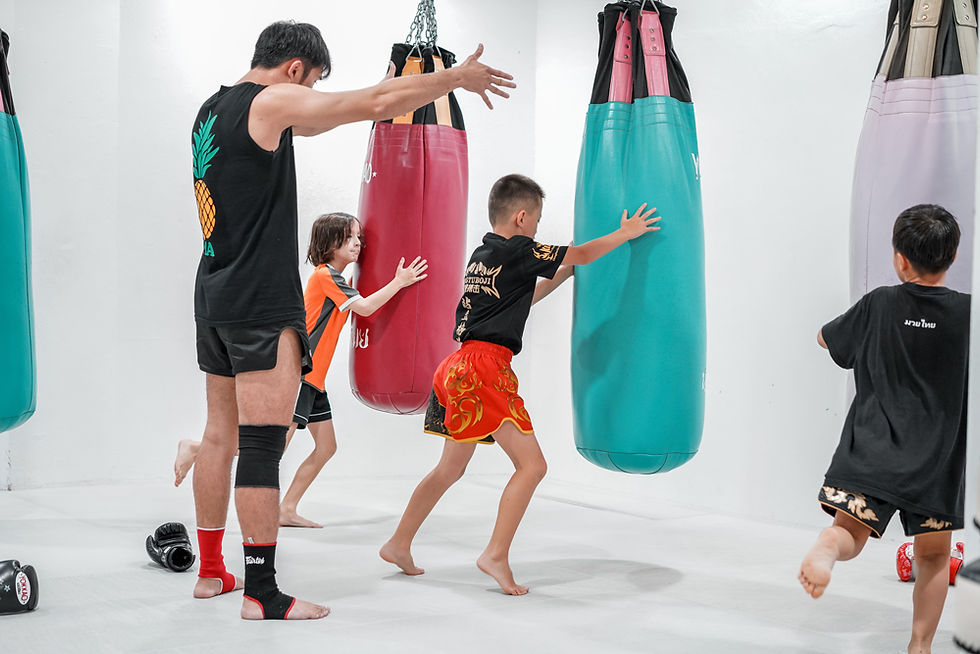
For children, Muay Thai focuses on learning how to move well. Footwork, posture, balance, and coordination are taught through repetition and simple drills. Everything is adapted to the child’s age and ability.
Classes are active but controlled. Energy is used productively, not allowed to spill over into chaos.
When taught properly, Muay Thai becomes a movement-based discipline that suits a wide range of children, including those who struggle with traditional sports.
What a Good Kids Martial Arts Class Should Look Like
Parents should feel comfortable observing a class before signing up.
A good kids class feels organised. Coaches are engaged and present. Instructions are clear and repeated patiently. Children know where to stand and what they are meant to be doing.
There is a clear flow. Warm-up. Skill work. Controlled drills. No long periods of waiting around. No shouting or rushing.
Children should leave class tired, positive, and feeling like they had fun. If they walk out smiling, talking about what they learned, and then immediately ask what is for dinner, that is usually a good sign.

How Martial Arts for Children Is Structured at Pineapple MMA
At Pineapple MMA, martial arts for children is built around structure, safety, and consistency.
Classes are designed to help children develop coordination, confidence, and focus through clear routines, supportive coaching, and sessions that are engaging rather than overly serious. While Muay Thai is the core discipline, training is adapted specifically for kids.
Fundamentals come first. Movement, balance, and rhythm are prioritised. Children are guided patiently and encouraged to improve at their own pace.
The aim is not competition. It is to give children a strong foundation that supports both physical development and confidence over time.
Parents can find more details about the programme here.
How Often Should Children Train Martial Arts?
For most children, consistency matters more than how often they train.
Regular attendance helps children build routine and confidence without adding pressure to already busy schedules.
If a child enjoys training and wants to attend more often, that can be considered later. The best results come when children look forward to class rather than feeling pushed. Enjoyment is often the deciding factor in whether a child sticks with martial arts long term.
What Age Is Best to Start Martial Arts?
There is no perfect age.
Some children are ready earlier. Others benefit from waiting until their coordination and attention span develop a little more.
Rather than focusing on age alone, parents should consider readiness. Can the child follow simple instructions? Can they stay engaged for short periods? Are they comfortable in a group environment?
Starting when a child is ready leads to better experiences and longer-term commitment.
How to Tell if a Programme Is Right for Your Child
Parents should trust what they see.
A good programme feels calm and organised. Coaches speak respectfully. Children are guided, not compared. Progress is encouraged without pressure.
If a class feels overwhelming or chaotic, it is okay to walk away. Martial arts should build confidence, not anxiety.

Final Thoughts on Martial Arts for Children in Singapore
Martial arts can be a positive part of a child’s life when it is taught with care and structure.
The right programme supports movement, confidence, and discipline while still making sure children enjoy the process. Safety and class structure matter far more than branding or promises.
Parents are encouraged to observe classes, ask questions, and choose environments that feel right for their child.
When introduced properly, martial arts becomes less about fighting and more about helping children move better, focus longer, and grow with confidence. And yes, it usually helps with bedtime too.


Comments