_edited.png)
Morning Muay Thai in Singapore: Why Training Before Work Works
Every professional in Singapore who intends to train regularly runs into the same problem: the day eats the plan. The lunchtime slot disappears into a meeting that ran long. The evening session loses to a client call, a deadline, or the simple gravitational pull of the sofa after a ten-hour day. The training that was definitely going to happen becomes the training that happens twice a month.
The morning session is the structural answer to this. Muay Thai Core classes at Pineapple MMA run at 6.30am, 7.30am, and 8.30am on weekdays, and the people who fill them have mostly arrived at the same conclusion by the same route: everything else in the calendar can be moved by someone else, but nothing that happens after 9am can cancel a session that finished at 7.30am.
The Case for Training First
The argument for morning training is not that mornings are magic. It is that mornings are protected. At 6.30am there are no meetings, no urgent messages, and no colleagues proposing one quick drink. The variables that kill evening sessions have not woken up yet.
There is also the matter of what the session does to the rest of the day. An hour of pad work at 6.30am is a comprehensively different start than an alarm, a commute, and a coffee. You arrive at your desk having already done the hardest thing you will do all day, with the particular calm that follows hard physical output. People who train in the morning describe the effect on the working day the same way people who train in the evening describe the effect on sleep: it is the part they did not expect and the reason they kept the habit.
Consistency data across any gym tells the same story. Morning regulars are the most consistent members in the building, not because they are more disciplined people, but because they scheduled their training at the only hour the rest of their life cannot reach.
What a 6.30am Session Looks Like
The format is the same one-hour Core class that runs through the rest of the day: warm-up, technique drilling, pad rounds on a timer, conditioning, cool-down. The intensity is real. What differs is the room. The early classes draw a specific crowd, mostly professionals on their way to the CBD’s towers, and the sessions run with a quiet efficiency that suits the hour. Nobody is there by accident at 6.30am.
Coaches run the early sessions with full attention to technique. The idea that morning classes are a lighter version of the real thing does not survive contact with one.
The Logistics: From Final Bell to Desk by Nine
The morning session only works if the transition to the office works, and this is where the facility matters more than the timetable. Pineapple MMA’s changing facilities are hotel-grade: multiple hot showers, free towels at every session, body wash and shampoo provided, Dyson hair dryers, and secure lockers for work clothes.
The sequence is simple. Arrive at 6.20am with your work clothes in a bag, train the 6.30am class, shower, and walk out the door before 8am into the middle of the CBD. From 139 Cecil Street, Raffles Place is a short walk and Tanjong Pagar is under ten minutes. The 7.30am class delivers you to your desk for nine. The 8.30am class suits flexible starts and remote-first mornings.
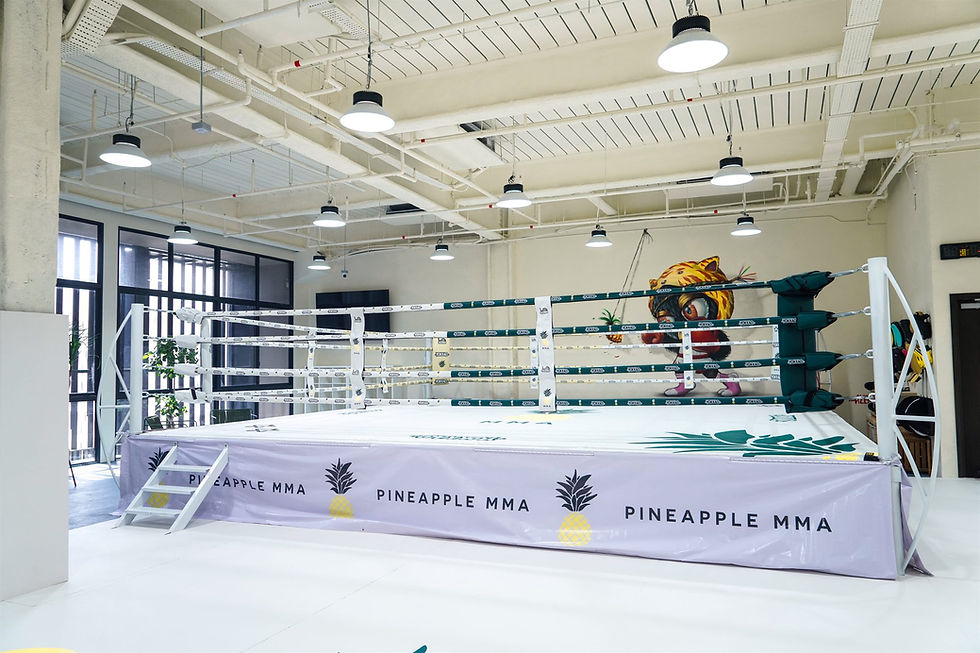
Two practical notes from the people who do this daily. First, pack the bag the night before; the 6am decision should be whether to get up, not what to bring. The guide on what to wear and bring to your first Muay Thai class covers the kit. Second, eat light before and properly after. A banana or half a protein bar at 6am carries you through the session; breakfast happens after the shower, and the hawker stalls and coffee options between Cecil Street and the office cover that better than anywhere in Singapore.
Morning, Lunch, or Evening: An Honest Comparison
The gym runs classes across all three windows, and each has a legitimate case. Lunchtime training is the most time-efficient and is covered in the lunchtime CBD guide. Evening training suits people who use the session to close the working day, and the after-work guide makes that case. The morning session wins on one axis only, and it is the one that matters most for a certain kind of calendar: reliability.
If your diary is stable, train whenever suits your energy. If your diary is a suggestion that other people overwrite daily, train before it starts. The comparison is less about physiology than about who controls the hour.
Building the Habit
The first week of morning training is genuinely hard, and pretending otherwise would be against house policy. The adjustment is mostly about sleep, not willpower: the 6.30am class works when the lights go out before eleven, and fails when it competes with midnight. The guide to recovery, sleep, and Muay Thai covers how training load and sleep interact, and it is worth reading before deciding morning training is not for you.
Most people find the rhythm inside two weeks. Two to three morning sessions a week is a sustainable starting load; the training frequency guide covers how to build from there.
What the Early Session Does to the Working Day
The productivity case for morning training is usually made with borrowed neuroscience, so here is the version that survives honesty. Hard exercise in the morning reliably produces two to four hours of elevated alertness and mood afterwards; the mechanism involves core temperature, circulating catecholamines, and the simple psychology of having already succeeded at something difficult before 8am. Whether that makes you objectively better in the 10am meeting is your call to make after two weeks of trying it. Members’ reports are consistent: the morning after a 6.30am session runs calmer and sharper than the average morning, and the effect is strongest on high-pressure days, which is precisely when an evening session would have been cancelled anyway.
There is also a scheduling effect that compounds over months. Morning trainers almost never miss two weeks in a row, because their slot does not compete with anything. Evening trainers ride a cycle of good weeks and lost weeks that tracks their work calendar. Over a year, the morning trainer accumulates significantly more sessions from the identical intention, and in training, accumulated sessions are the entire game. The guide on how long it takes to get good at Muay Thai makes the same point from the other direction: progress tracks hours on the pads, and the morning slot is the most reliable hour-delivery mechanism a busy professional has.
The Night-Before Checklist
The 6.30am class is won or lost the previous evening. The checklist the morning regulars run:
Bag packed and by the door: training kit, work clothes, wraps, water bottle. The gym provides towels, body wash, and hair dryers, so the bag is smaller than you think.
Lights out by 11pm. The class does not require heroic sleep, but it does require six and a half hours minimum, consistently. The recovery and sleep guide covers why cutting sleep to add training is a losing trade.
Breakfast decided in advance: something small before (a banana does it), the real meal after the shower.
Alarm across the room, one snooze budgeted, and the decision to go made the night before rather than renegotiated at 5.55am. The people who succeed at morning training removed the morning decision entirely.
Frequently Asked Questions
What time do morning Muay Thai classes run in Singapore’s CBD?
At Pineapple MMA, 139 Cecil Street, Muay Thai Core classes run at 6.30am, 7.30am, and 8.30am on weekdays. The 6.30am and 7.30am classes deliver you to a CBD desk before nine; the 8.30am suits flexible starts.
Are 6.30am classes suitable for beginners?
Yes. The format is the same one-hour Core class that runs all day: warm-up, technique, pad rounds, cool-down, scaled to the person in front of the pads. Beginners can also start with Foundation classes and move into the morning Core slots once the basics are in place.
Should I eat before a 6.30am Muay Thai class?
Eat light or not at all, by preference. Most morning regulars have a banana or half a protein bar at 6am and eat a proper breakfast after the shower. Training fully fasted works for some people and not others; try both in your first two weeks.
Will morning training leave me exhausted at work?
The opposite, after the first week. The initial few sessions carry an adjustment cost while your sleep schedule shifts, then the post-training alertness becomes the reason people keep the habit. If you are consistently flat at work, the fix is almost always bedtime, not the class.
How many mornings a week should I train?
Two to three is the sustainable starting load, ideally on non-consecutive days. Build from there using the training frequency guide rather than starting with five and quitting in week three.
Start With One
The way to find out whether morning training suits you is not to reflect on whether you are a morning person. It is to book one 6.30am class and observe what the rest of that day feels like.
A trial class is $38 and includes the full facility, the weights room, the recovery suite with ice bath and sauna, and the showers that make the office transition work. Book a trial class at Pineapple MMA, 139 Cecil Street, #14-01 YSY Building, Singapore 069539.


Comments