_edited.png)
Muay Thai Classes in Singapore: What a Training Week Actually Looks Like
A typical Muay Thai training week in Singapore is three to four one-hour classes, each following the same structure: warm up, technique, pad and bag rounds, conditioning, stretch. Many members train more than that once their body adapts. Beginners usually train three times a week, mixing Foundation with Core, the main class, from their first few weeks, and add technique or clinch work once the basics hold up under pressure.
Most gym websites list class names without explaining what they are or in what order you should take them. This article sets out the actual pathway, what each class type does, how many sessions a week you need for the result you want, and what a realistic first three months looks like.
The Class Types, and What Each One Is For
Foundation
Where everybody starts. Stance, guard, the basic punches, the roundhouse kick and the teep, taught slowly with no pressure. Intensity around two out of five. The point of a foundation class is not to make you fit. It is to set the mechanics that everything else is built on, because habits formed in the first month are the hardest to change later.
Most beginners start joining Core within their first couple of weeks, keeping Foundation in their week to sharpen the mechanics. Some stay in Foundation longer, and there is no penalty for that.
Core, or the main class
The working class. Same structure, higher pace, more complex combinations, full rounds on pads and bags. This is where conditioning is built, and it is one of our most popular classes, with beginners as much as experienced members. Coaches scale the combinations and pace to whoever is in the room, so someone in their second week can train alongside someone with years behind them. Intensity around three or four out of five.
Technique
A single skill broken down over an hour. One week it might be the switch kick, another the long guard, another countering the jab. Technique sessions are where plateaus get broken, and they are the most underused class in most gyms because people default to the main class.
Clinch
Close-range control: posture, neck control, knees, sweeps. This is the part of Muay Thai that does not exist in kickboxing, and it is the part most beginners avoid longest. It is worth starting earlier than you think, because clinch is largely a skill of relaxation rather than strength.
Sparring
Optional, supervised and matched to level. Sparring is not fighting. It is controlled practice at a percentage you agree with your partner. Plenty of members never spar, train for years, and get very good. Our full guide is in sparring for beginners.
The full list of what we run and at what level is on the classes page, with current times on the schedule.
How Many Sessions a Week You Actually Need
This is the question that decides your results more than which gym you join.
Once or twice a week maintains. You will enjoy it and stay roughly as fit as you are, but technical progress is slow because you spend much of each session remembering the last one
Three times a week is where real progress starts. Enough repetition for skills to stick between sessions, enough recovery to keep going, and realistic around a full-time job. This is the minimum we recommend
Four times a week is the sweet spot for most members. Noticeable fitness change within a month, and technique that starts to look like technique rather than imitation
Five or more is more common than people expect. Plenty of our members train five or six days a week, often pairing a class with a strength or recovery session. It works well once your body has adapted, with attention to sleep and recovery
For a complete beginner the honest recommendation is three sessions a week for the first month, mixing Foundation and Core, with a rest day between them where you can. Moving up to four once the initial soreness settles is the natural next step, and many members go well beyond that once training becomes part of their routine. We have covered this in more detail in how often you should train Muay Thai per week.

A Realistic Sample Week
This is an example rather than a timetable. Check the schedule for what actually runs when.
Beginner, three sessions
Monday evening Foundation, Wednesday evening Core, Saturday morning Foundation. A rest day between each. Core is scaled to the room, so there is no need to wait months before trying it, and the weekend session is usually the one people find easiest to protect, because work does not move it.
Intermediate, four sessions
Monday morning Core before work, Wednesday evening Technique, Thursday lunchtime Core, Saturday morning Core. Mixing a technique session in stops the main class becoming repetitive and is where most of the visible improvement comes from.
Committed, five or six sessions plus strength
Monday Core, Tuesday Clinch, Wednesday Technique, Thursday Core, Saturday Core and an optional second weekend session, with two short strength sessions in the weights room on non-consecutive days. This is a normal week for a lot of our members, not an exception. Our weights room is included with every membership, which removes the usual excuse for skipping strength work. There is a full guide in combining Muay Thai and strength training.
What the First Three Months Feels Like
Weeks one to four
Progress is fastest in this month, even though it rarely feels that way from the inside. By the end of the first week you can hold a stance, throw a jab and land a roundhouse on the pads. By the end of the fourth, those are starting to come without thinking. The awkwardness is real, your kicks will feel like they belong to somebody else, and cardio will be the limiting factor before technique is. Everyone in the room went through the same month.
Weeks four to eight
Things start to connect. Combinations stop needing to be thought through one strike at a time. Conditioning improves noticeably, and most people find they can complete full rounds. This is usually when Core becomes the backbone of the week.
Weeks eight to twelve
The sport becomes readable. You start to see what a coach is asking for before they finish the demonstration, and pad rounds begin to feel like a conversation rather than a test. Body composition changes are usually visible by now if training is consistent.
The people who fall away almost always do so in weeks two to four, during the awkward phase, and almost never after week eight. If you are in that window, the only advice that matters is to keep showing up.
Fitting It Around a Working Week in the CBD
Most of our members work nearby, and the sessions that survive contact with a real job are the ones that do not require a special trip.
Morning classes work well if the gym is on your commute, because nothing can move them. Lunchtime sessions work if the showers are good enough that you can go straight back to a desk. Evening classes are the easiest to book and the easiest to cancel when a meeting overruns.
We open 6.30am to 10pm on weekdays and 9am to 4pm at weekends, at 139 Cecil Street, two minutes from Telok Ayer MRT. There are practical guides to each option in morning Muay Thai and lunchtime training in the CBD.
Recovery Between Sessions
Training frequency is limited by recovery, not by enthusiasm. The people who manage four, five or six sessions a week for years are not tougher than everybody else. They sleep properly and they take the easy recovery wins.
Two things matter more than anything else in the first few months. Sleep, because that is when technique consolidates as much as when muscle repairs. And spacing, because stacking hard sessions back to back before your body has adapted tends to produce a week off rather than a stronger week.
Beyond that, shin conditioning comes with time rather than effort, sore shins in month one are normal, and stretching after class does more for hip mobility than any separate routine. If you want to add something, contrast work is the most useful. Our recovery suite runs a Brass Monkey ice bath and a sauna, bookable as a 50 minute private session at $60 plus GST or $540 plus GST for ten, and it is open to non-members as well. There is a fuller explanation in what heat actually does for recovery and what cold water recovery actually does.
What You Need to Start
Training clothes, a towel and a water bottle. Gloves and hand wraps are available to rent, so there is nothing to buy before you know whether you are staying. Muay Thai is trained barefoot.
Beyond that, the only requirement is turning up. There is no fitness prerequisite and no age limit that matters. Our membership runs from early twenties to well past fifty, and around half are women.
Frequently Asked Questions
How many times a week should I train Muay Thai?
Three to four times a week is the recommendation for most people, giving enough repetition for skills to stick between sessions while leaving room to recover. Many members train five or more times a week once their body has adapted. Once or twice a week maintains fitness but produces slow technical progress. Beginners should start with three classes a week, mixing Foundation and Core, and build to four once the initial soreness settles.
What is the difference between a foundation and a main Muay Thai class?
A foundation class teaches mechanics at low intensity, around two out of five: stance, guard, the basic punches, the roundhouse kick and the teep, with no pressure. A main or core class runs the same structure at a higher pace with longer rounds and more complex combinations. Core is one of the most popular classes at the gym, and many beginners join it within their first couple of weeks alongside Foundation.
How long does it take to get good at Muay Thai?
Combinations start to feel natural at around six to eight sessions. The sport becomes readable at roughly three months of consistent training. Genuine competence, meaning reliable defence and technique that holds up under pressure, generally takes one to two years of training three or four times a week. Progress is fastest in the first three months.
Do I need to spar to train Muay Thai?
No. Sparring is optional at any reputable gym and is introduced only when your defence is reliable, supervised and matched to your level. Many members train for years without sparring and still develop strong technique and conditioning. Sparring is controlled practice at an agreed intensity, not fighting.
What should I expect in my first month of Muay Thai?
Expect it to feel awkward. The stance is unfamiliar, kicks feel uncoordinated and cardio is usually the limiting factor. Shins are often sore from checking kicks. This settles by roughly week four, when combinations begin to connect and conditioning improves. Most people who quit do so in weeks two to four, so the main advice is simply to keep attending.
Start With One Class
The pathway above only matters once you have been in the room. A trial class is $38 including GST and includes glove and wrap rental, so there is nothing to buy first.
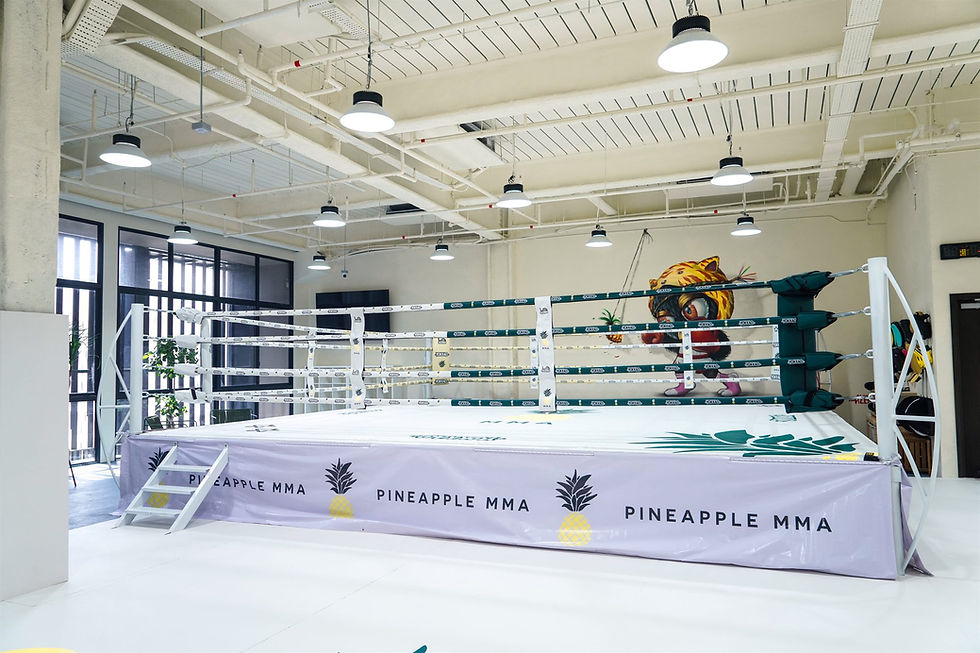
We are at 139 Cecil Street, #14-01 YSY Building, two minutes from Telok Ayer MRT. The gym runs 7,000 square feet with 18 Yokkao bags and a 7 by 7 metre ring, the largest in Singapore, and every membership includes the weights room. Full rates are published on the pricing page.


Comments